
25
Years in Lahore
Founded in October 2001 by development professionals, community activists, architects, sociologists and academics.
Documenting historic cities, community memory, and sustainable urban futures across Lahore and Punjab.
Water Governance • Sanitation
Researching drinking water policy and the performance of Punjab’s water utilities, and advocating for public-sector reform that serves the urban poor.
Solid Waste • Informal Recycling
Bringing solid waste management and the livelihoods of informal waste workers into public debate through research and open urban forums.
Accessible Transit • Mobility Justice
Advocating for affordable public transport, safe walking routes, and transport planning that serves the daily journeys of low-income workers.
Tenure Security • Katchi Abadis
Researching katchi abadi regularisation policy and advocating for secure tenure and civic services for informal settlements across Punjab.
Biological Diversity • Ecological Balance
Advocating for the rights of more-than-human communities, protecting vital canal ecosystems, and advancing harmony between human habitats and the natural world.
Who We Are
The Punjab Urban Resource Centre (PURC) is an urban policy and research think tank established in Lahore in October 2001. It works as a bridge between government and the urban poor in Punjab, advancing low-cost, alternative and affordable solutions for housing, water, sanitation, transport and the urban environment.
Working directly with communities and government, PURC conceives, tests, and documents low-cost, alternative, and affordable ideas to make our cities work for everyone in general, but for the urban poor in particular.
A record built on information, research, public forums, advocacy and training since 2001.
25
Founded in October 2001 by development professionals, community activists, architects, sociologists and academics.
2004
Open forums bring citizens, officials and planners together on water, transport and city planning.
2005
Students join PURC each year to research and document urban issues in Lahore.
10
Research reports, policy analyses and Urdu booklets on water, sanitation and housing.
Areas of Work
Water, climate and food are PURC’s current priorities, alongside housing, mobility and the urban environment.
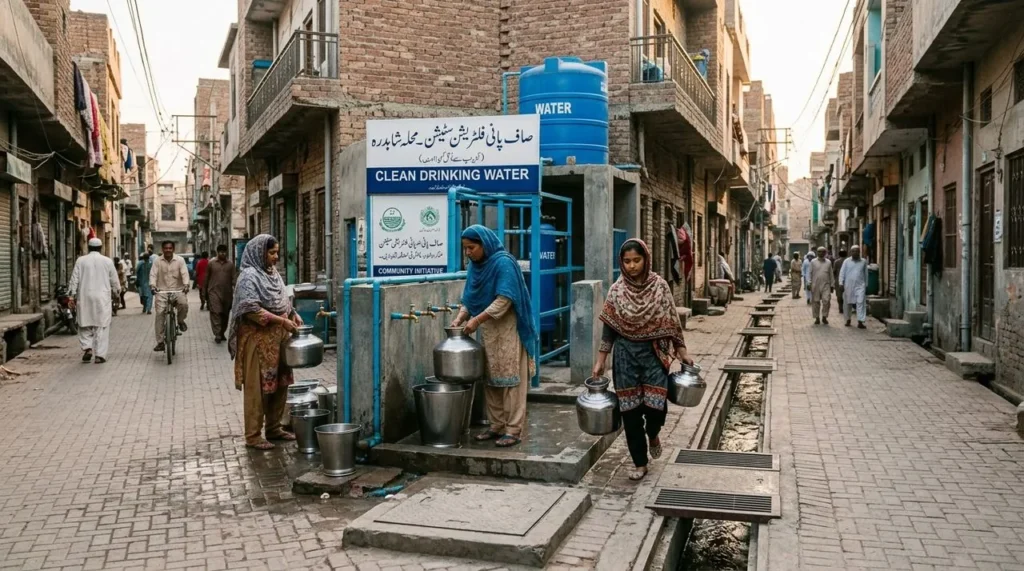
Fair access to safe drinking water and working sanitation, especially for informal settlements.
How PURC contributes: Research into water policy and utility finances, open forums on water supply, and policy proposals to government.
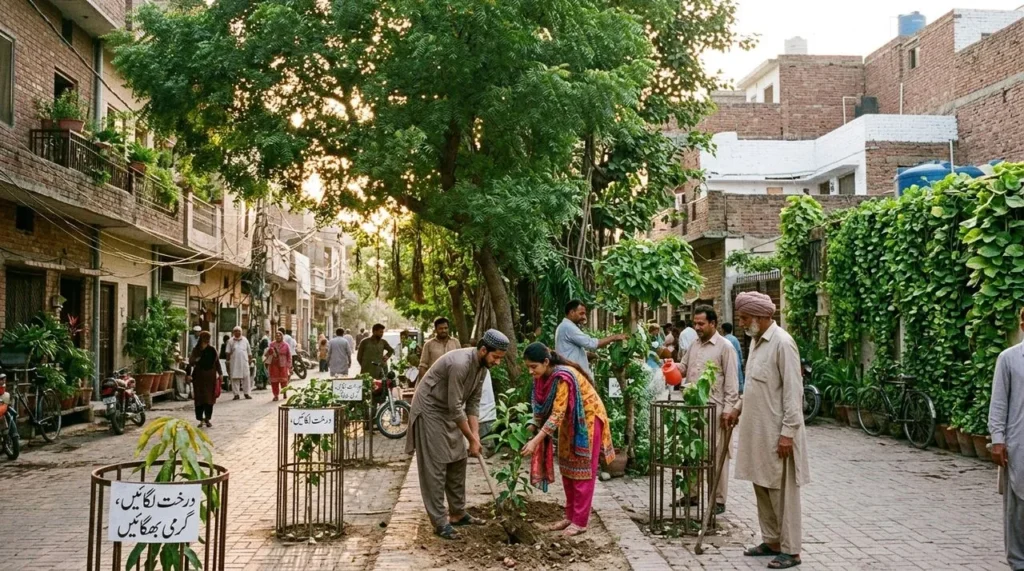
Helping Punjab’s cities prepare for rising heat and flooding, with low-income residents at the centre.
How PURC contributes: Documenting climate risks in the city, raising them in public forums, and proposing pro-poor adaptation measures to local and provincial government.
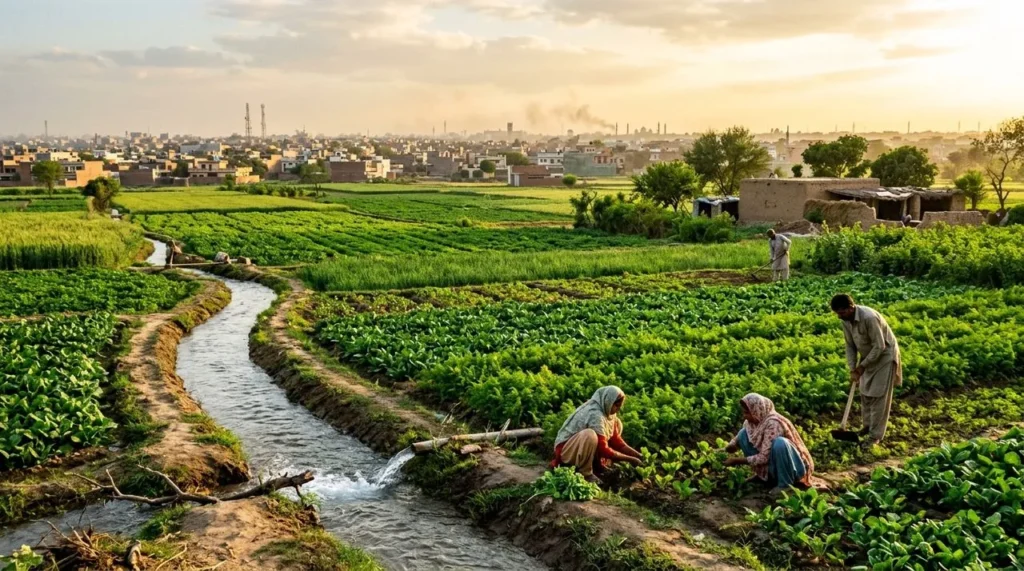
Protecting the farmland around Punjab’s cities that feeds their residents.
How PURC contributes: Research on land use and urban growth, public dialogue, and planning proposals that protect productive land.
PURC strives to empower urban citizens through information, research, dialogue, training and advocacy, engaging political parties, government agencies, academia, students, journalists and the private sector.
PURC collects information on urban issues through daily newspaper clipping and analysis, and from government departments, the media, and national and international organisations.
PURC studies and documents selected development activities in the city, and the ongoing work of government and non-government organisations on urban and development issues.
Regular forums, open to all citizens, local government representatives and planning institutions, build an informed understanding of development, policy and planning issues through information exchange and debate.
PURC makes this information available through a reference library of books, reports and maps, together with transcripts of the forum debates.
PURC prepares policy briefs, policy memos, position papers and other proposals for government, demanding transparency, accountability and responsiveness in urban planning.
PURC runs training programmes for students, government officers and other stakeholders on urban governance, urban growth management and urban planning.
Ground Evidence
Research reports on water governance, utilities and katchi abadis — free to read and cite.
2012
Water Governance · 99 pages · PDF 5.6 MB · ISBN 978-969-9773-00-6
By Imdad Hussain, PhD
An analysis of the Punjab Drinking Water Policy, notified in 2011, using a trends perspective and WaterAid’s equity and inclusion perspective. The study traces how the policy was made, examines drinking-water allocations in the Annual Development Programme 2011-12, and assesses whether the policy can be implemented. It finds that the policy acknowledges problems but offers few concrete measures to solve them. Published with support from WaterAid Pakistan.
The ADP 2011-12 contained 311 drinking-water schemes costing Rs 58,255 million, but allocated only Rs 9,409 million to them — about 16% of their total cost.
2008
Public Utilities · 64 pages · PDF 959 KB
By Rabia Ezdi & Amir Butt
Prompted by the Punjab government’s 2004 plan to privatise Lahore’s Water and Sanitation Agency (WASA), this study examines the privatisation process, WASA’s operations and finances, and the record of privatised water utilities in cities including Buenos Aires, Manila and Cochabamba. It concludes that privatising WASA is inadvisable and that the agency can be repaired through public sector reform, including citizen representation on its board and progressive cross-subsidised tariffs.
WASA covered its costs from its own revenue until 2003; by 2007-08 it earned about Rs 2 billion against spending of about Rs 2.8 billion, a deficit of Rs 772.5 million.
2013
Housing & Land · Urdu · 53 pages · PDF 4.5 MB
By Amir Butt
An Urdu-language study of katchi abadis (informal settlements) in Punjab, with a focus on Lahore. It explains why katchi abadis form and traces regularisation policy from the 23 March 1985 cut-off date through the Punjab Katchi Abadis Act 1992 to later amendments that moved the cut-off to 31 December 2006 and then 31 December 2011. It documents the obstacles to granting proprietary rights and closes with common misconceptions about katchi abadis.
Of 1,100 pre-1985 katchi abadis listed under the 1985 policy, 275 were dropped as ineligible; land in 741 of the remaining 825 (89%) had been transferred or regularised by June 2007.
2011
Provincial Policy · 51 pages · PDF 1.1 MB
By Punjab Urban Resource Centre
A desk study, prepared with financial assistance from WaterAid, reviewing the legislative, policy and institutional framework for water and sanitation in Punjab, with provincial statistics and the main issues in nine cities. It concludes that access to improved water sources is high but water quality is poor, and recommends that government redirect human and capital resources towards sanitation, including through community component-sharing.
About 97% of people in Punjab have access to improved drinking-water sources, but 49% of those sources are contaminated.
Frequently Asked Questions
Quick answers about who we are, what we work on, and how to work with us.
The Punjab Urban Resource Centre (PURC) is an urban policy and research think tank founded in Lahore, Pakistan, in October 2001 by a group of development professionals, community activists, architects, sociologists and academics. It acts as a bridge between government and the urban poor in Punjab, proposing inclusive, affordable and alternative ideas for housing, water, sanitation, transport and the urban environment.
PURC works through six activities: issue-based information collection, research and documentation, an open forums programme, a reference library, advocacy through policy briefs and position papers, and training for students and government officers.
PURC focuses on mobility, urban services such as water, sanitation and solid waste, health and welfare, ecology, rights, and urban housing including katchi abadis. It is currently focusing on water, climate and food, and on the challenges and opportunities that climate change and AI create for the urban poor.
Since 2004, PURC has held open forums where citizens, local government representatives, planners and experts debate development, policy and planning issues, from water supply and the privatisation of Lahore’s WASA to transport and city planning. Forum debates are transcribed and kept in PURC’s reference library.
PURC’s studies are free to read and download as PDFs, including Water Supply in Lahore (2008), the State of Water & Sanitation in Punjab position paper (2011), Thirsty Cities (2012) and Katchi Abadis of Punjab (2013, in Urdu). Researchers can contact the Secretariat about other studies.
Write to info@purc.org.pk, call +92 42 35466227 or +92 301 4353809, or visit the Lahore Secretariat at 95-C Fazal Street, Allama Iqbal Road, Garhi Shahu, Lahore. You can also use the inquiry form on this page.
PURC regularly convenes informal settlement representatives, urban planning scholars, journalists, and municipal engineers in Lahore. Reach out to initiate collaborative dialogues, request field research documentation, or coordinate community workshops.
Researchers, students and journalists are welcome to contact PURC about its studies and reference library.
Direct Inquiry Portal
Complete this form to reach our research directors, field organizers, or administrative team in Lahore.